
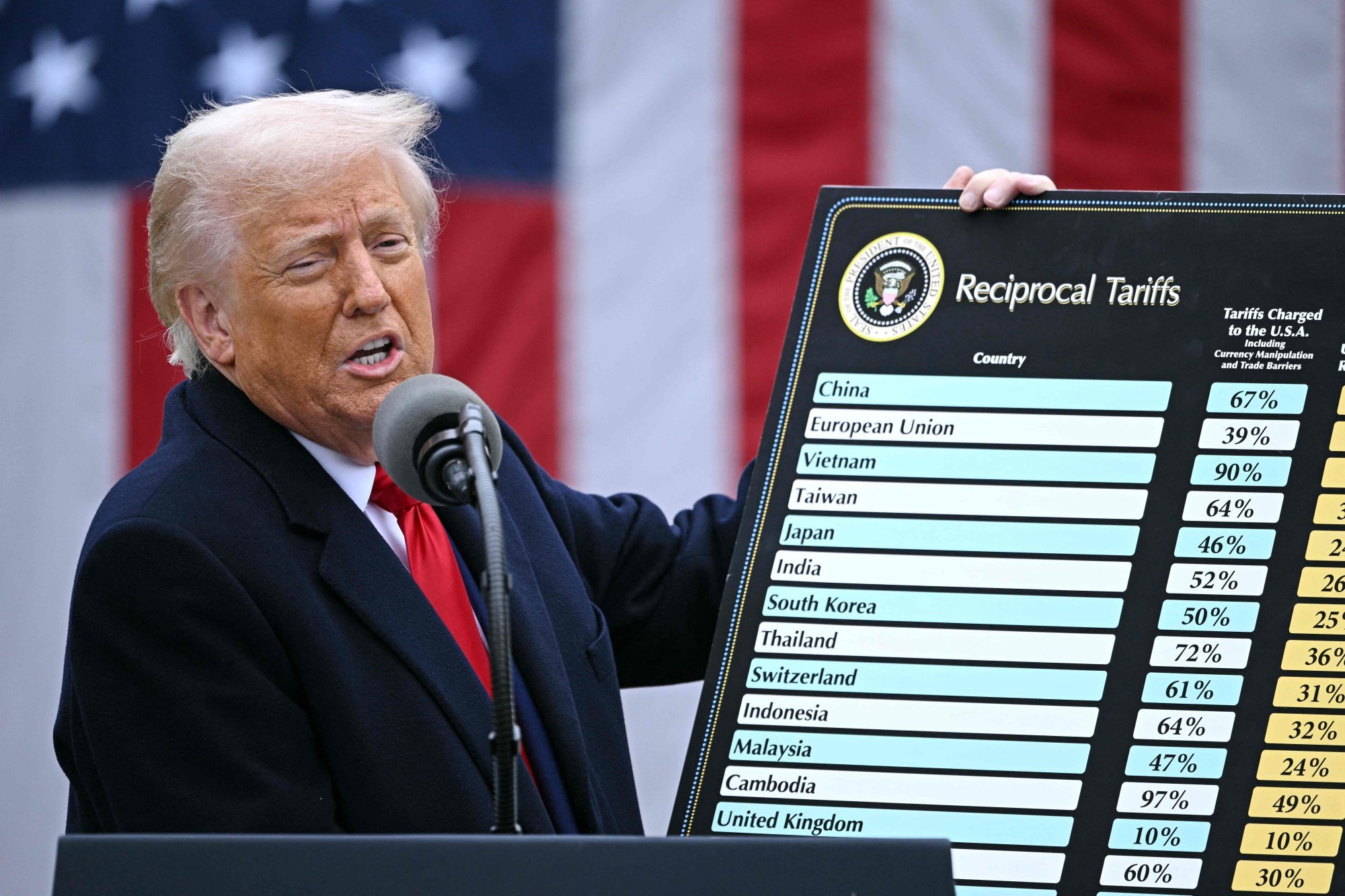
The unavoidable downturn of America illustrates that countries prosper by focusing on their own interests and collaborating with others rather than pursuing economic supremacy.
In early May, when Roman Catholic cardinals gathered together
their conclave
, US President
Donald Trump
posted an AI-generated image
of him as the pope
Shortly after making his statement, he expressed his desire to become a pope. The reactions worldwide came quickly, although they weren’t universally surprising. This display of brashness was quintessentially American—a type of performance the global audience had gotten used to seeing. Trump isn’t the pioneer or sole representative of such conduct within U.S figures; many others have also acclimatized the public to similar antics over time.
When Trump declared extensive tariffs on international trade allies
in April
, with China bearing the brunt, financial markets plunged into their worst turmoil since the early days of the pandemic. Ignorance, arrogance, exceptionalism, and fear of “the other” converged in a display of American crassness on steroids. Trillions of dollars evaporated from stock valuations. Only when the fallout became too severe did Trump pause tariffs for most countries, eventually negotiating with China in mid-May. Yet much of the American public missed the larger picture: these tariffs weren’t about sparking a trade war or addressing claims of the world “ripping off” America. They were a desperate gambit to prop up the American brand – a brand that was sustained for decades by economic hegemony and the “exorbitant privilege” of the dollar, but is now facing its moment of decline.
Eager to demonstrate toughness, Trump claimed that numerous global figures were lining up to strike agreements with him and even described them as willing to “kiss his rear end.” Describing this behavior as merely vulgar falls short; however, the international community showed little reaction. Such overt displays of self-assurance have always played a significant role in America’s identity, evident across various sectors like entertainment, politics, media, finance, and athletics. For many abroad, these actions epitomize the juvenile nature of what they view as an assertive new country. Accumulated wealth from exploiting indigenous territories fostered an unbridled sense of superiority, making such conduct commonplace. In earlier times, the globe affectionately labeled this phenomenon the “Ugly American,” which inadvertently reinforced this aspect of American character. Now, it seems to have evolved into a system dominated by extremists, endorsed by a substantial portion of the populace.
Do you have questions about the biggest topics and trends from around the world? Get the answers with
SCMP Knowledge
Our latest platform features handpicked content including explainers, FAQs, analyses, and infographics, all provided by our acclaimed team.
The U.S. trade deficit, frequently used to justify protective tariffs, is essentially a manifestation of a more profound problem. The actual concern lies in the diminishing attractiveness of both American products and the cultural influence they wield. Countries such as
China
,
South Korea
, and before them
Japan
Now focus on producing top-quality products. In the meantime, buoyed by its own discourse on globalization, the United States redirected its economy toward service sectors dominated by finance, thereby weakening its industrial foundation. Despite this shift, Americans kept borrowing and consuming at unprecedented rates, with government encouragement supporting these behaviors. By living above their means, they accumulated massive debts. Throughout this period, they were made to feel that their consumption drove worldwide economic expansion—a notion propagated through U.S.-based business news outlets such as Bloomberg and CNBC. This narrative portrayed American lifestyle as the benchmark for global standards for many years. However, what used to be seen as highly desirable has become increasingly viewed as untenable, substitutable, and, from an international perspective, rather distasteful.
The globe has now recognized the unsustainability of the U.S.-led “rules-based order” and the emptiness of what is known as the American Dream. Why then did it take so long for the world to understand that this dream is actually just a facade with no real substance?
The misconception of American supremacy
The
United States
has often perceived itself as a beacon for the globe—a perspective molded by Puritan moral certainty and 19th-century imperial fervor, symbolized by the concept of “manifest destiny.” Grounded in Judeo-Christian principles and white supremacist beliefs, initial colonists saw their settlement in America as a sacred duty, nurturing an erroneous belief in their own ascendancy. Similar to the Calvinist pioneers who established apartheid, these early inhabitants
South Africa
The conviction that Americans were destined by divine providence to control the entire continent fostered a misplaced sense of entitlement cloaked as ethical responsibility.
Today, this arrogance persists, even as evidence of American decline mounts. The propaganda that accompanied America’s global expansion – driven by the narrow interests of its business elite – is unparalleled. A world emerging from centuries of colonisation was sold the virtues of crass consumption and exports like junk food and B-movies. But this era is drawing to a close as a multi-polar, post-Western and truly interconnected world emerges.
Think about education, which has been heralded as a cornerstone of America’s soft power. Even though 16 developed countries surpass the U.S. in science education and 23 do so in mathematics, many Americans remain convinced that their nation remains within the top three globally. This misplaced confidence isn’t confined just to academic achievements; it also manifests in areas like dwindling economic competitiveness, stagnant technological advancements, and underprepared workers. Media outlets, along with industries such as Hollywood and tech giants based in Silicon Valley, portray American lifestyle as the ultimate model for others worldwide, overlooking significant internal issues—such as widespread obesity, drug addiction crises, firearm-related deaths, persistent racial discrimination, and governmental operations swinging from inefficiency to theatrics. Describing this notion as “the American dream” seems fitting since believing in it requires naivety. However, the international community now sees through these illusions.
Although all countries possess imperfections, no country has rivalled the United States in its unapologetic portrayal of being an international philanthropist. Despite offering certain benefits globally, the U.S.’s unmatched dissemination of vulgarity—through fast food, popular culture, and materialistic lifestyles—has caused extensive harm around the globe.
In the 20th century, the American Empire recognized that it could not depend exclusively on military strength anymore, even as the military-industrial complex continued to be pivotal to its economy. It began leveraging its economic prowess to propagate its culture and “soft power.” Drive-ins, fast-food chains, low-budget films, chat shows, and popular music emerged as tools for cultural hegemony. Together with naval fleets and marine units, these elements formed part of their strategic influence.
McDonald’s
,
Coca-Cola
and
Starbucks
.
The Pentagon continues to allocate billions for “soft power” initiatives, supporting the worldwide dissemination of these programs.
Marvel
movies and McNuggets.
Hollywood
, promoted globally as a symbol of innovation even though it has an America-centered bias and lacks sophistication, keeps producing clichéd superhero follow-ups and superfluous blockbusters. These inundate international markets with motifs of lone heroes and aggressive masculinity.
Meanwhile, brands like
Apple
,
Amazon
and despite advocating for sustainability, Nike promotes unsustainable consumption. Similarly, social media platforms like
Facebook
and
Instagram
, supposedly created to foster connections, have left a quarter of the global population in solitude. The heads of these companies, belonging to major corporations,
Mark Zuckerberg
to
Elon Musk
embody the extreme loneliness and peculiarity that their creations impose.
This widespread cultural onslaught has firmly implanted American vulgarity around the world, seeping into sectors like entertainment, finance, fast food, and business education. Undoing this impact will require many years.
Why the globe is moving on
Once upon a time, American economic power steamrolled over local customs, substituting them with a uniform consumer culture. However, the same forces that fueled its imperial growth are now hastening its downfall.
China
leads in tech,
Europe
in terms of quality of life, and South
Korea
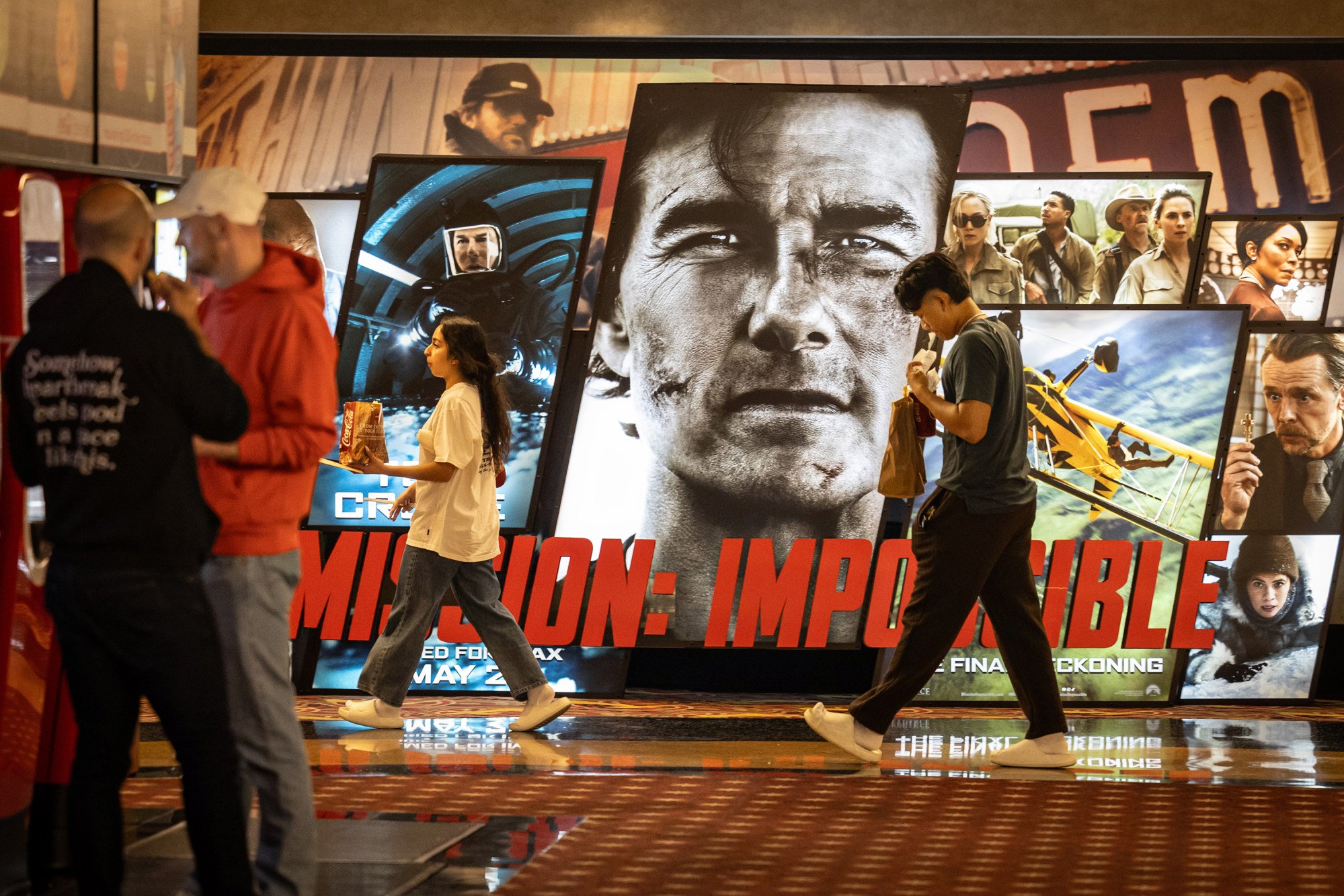
In terms of cultural impact, whereas America holds onto tariffs and familiar blockbusters such as the most recent addition to the franchise,
Mission Impossible
franchise. Even missteps in foreign policy like the conflicts in Vietnam—and offenses such as the interventions in Iraq and Afghanistan along with Washington’s backing of genocide—
in Gaza
– Highlight the increasing worldwide rejection of American exceptionalism and intimidation tactics.
Instead of interacting with global issues to seek peaceful resolutions in complex areas, its ideological distortions and financial motivations consistently overshadow diplomacy, leading it to rely on military might regardless of the worldwide consequences. Economically, instead of fostering new ideas, the U.S. turns to heavy-handed tactics such as sanctions and import taxes, trying to hide its declining edge in the marketplace. The country’s top technology companies openly push for barriers against fair competition, highlighting their inconsistency regarding support for innovation and adherence to free-market principles.
At the same time, various countries are reviving their distinctive practices: Sweden’s fika emphasizes social bonds rather than efficiency, whereas Japan’s gastronomic customs stress restraint instead of indulgence—quite different from America’s “quick gulp” mentality and penchant for supersized portions. As global trends shift, America needs to follow suit by letting go of years of misplaced uniqueness and adopting a more humble approach.
Allow its withdrawal into itself, even if unwilling, to transform unexpectedly into a blessing—evidence that countries prosper not through subjugating others, but by initially setting their own affairs right.
If leaders mirror their society, America’s present roster has a lot to say. People such as Trump, Musk, and
Jeff Bezos
These are outcomes of a system that worships wealth accumulation, favors flamboyance over depth, and deifies fame.
Trump’s tariffs and Musk’s visions of Mars reveal a country that advocates for free markets yet worries about competition, criticizes empires but constructs one of its own. The vice-president highlights this contradiction.
J.D. Vance
‘s dismissal
of the Chinese as “farmers”
uncovers the vulnerability hidden behind America’s confident exterior.
This unbridled desire for extravagance has led to severe income inequality, inadequate funding for schools, and massive environmental damage. If America fails to move away from glorifying vulgarity, it not only stands to forfeit its position as a leader in economics and culture but also faces the danger of self-destructing due to its inherent contradictions.
Chandran Nair founded the Global Institute for Tomorrow and is part of the Club of Rome. Additionally, he has written “Dismantling Global White Privilege: Equity for a Post-Western World” and “The Sustainable State: The Future of Government, Economy, and Society.”
More Articles from SCMP
The tightening of US visa policies mirrors measures from Trump’s initial term, whereas China’s reaction indicates a change in approach.
The Shangri-La Dialogue: France’s Macron cautions that trustworthiness hangs in the balance if denunciation of war lacks consistency.
A team led by NWD secured US$166 million from the sale of 24 upscale residences in the Southern district.
China’s advances serve as a ‘clear message’ aimed at normalizing relations with Japan, according to experts.
The article initially appeared on the South China Morning Post (www.scmp.com), which is the premier source for news coverage of China and Asia.
Copyright © 2025. South China Morning Post Publishers Ltd. All rights reserved.