

Mass tourism is once again pushing the boundaries of Europe’s busiest destinations—and islands are bearing the brunt of this impact.
Given the constrained land availability and vulnerable infrastructure, an unprecedented number of tourists has escalated housing expenses and placed immense strain on community resources to a critical level.
In recent times, demonstrations have broken out throughout the island chains as inhabitants urge their local administrations to prioritize their needs.
A fresh analysis by BookRetreats.com has explored which islands are experiencing the highest overcrowding and which ones have silently adopted a more sustainable model.
Over-tourism has a notably detrimental impact on smaller areas.
“Europe’s islands have been dramatically altered by tourism, yet this rapid and extensive change can no longer be sustained,” according to Sean Kelly, who co-founded BookRetreats.com.
When local infrastructures are strained and neighborhoods are marginalized, it indicates that changes are necessary. This underscores the importance of examining the data, identifying areas under greatest stress, and selecting destinations that would genuinely prosper from our involvement.
The booking retreat website examined recent statistics provided by the European Commission with an emphasis on calculating the number of overnight stays in tourist accommodations per square kilometer (km²). This metric serves as a crucial indicator for assessing tourism density.
This measurement indicates the degree of concentration in the tourism sector.
small regions
, which has particular significance for island communities due to their constrained infrastructures, lands, and natural resources.
Malta is the European island with the highest concentration of tourists.
Mallorca may be Europe’s most visited island, but no destination packs more tourism into such a small space as Malta.
At just 316 km2,
Malta
is small enough to fit into London five times over, yet it sees more than 38,700 overnight stays per km2.
The strain is evident throughout the island chain, particularly in popular destinations such as Comino’s Blue Lagoon, where crowds can swell to about 12,000 tourists per day during summertime.
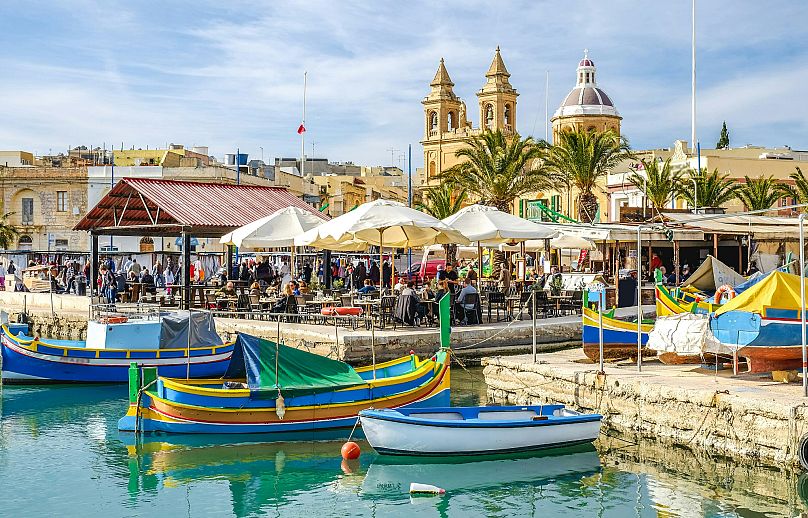
Owing to the significant strain these figures put on both the nearby ecosystem and infrastructure, authorities have recently implemented a daily limit of 4,000 tourists at the location, with reservations being mandatory now.
Even with these evident issues, the administration has declared intentions to increase the number of visitors to 4.5 million by the year 2034.
The Canary Islands are experiencing the pressures caused by excessive tourism.
As expected, following Malta in the rankings are several Spanish island destinations.
Renowned for its golden shores, volcanic paths, and perpetual sunlight, Lanzarote has consistently attracted vacationers. According to recent figures, the island experiences over 21,600 nightly visits for each square kilometer.
Tenerife
Records show 16,873 overnight stays, trailed closely by Gran Canaria with 16,709. Interestingly, even Fuerteventura—typically promoted as a more tranquil alternative—is ranked 12th amongst the busiest islands on the continent.
Even though tourism makes up about 35 percent of the
Canary Islands
Many locals believe that the costs of mass tourism exceed the advantages, according to GDP figures.
With the arrival of summer, demonstrations have swept through the archipelago, as crowds take to the streets demanding limits on tourist influxes, tougher regulations on short-term lets, and greater preservation of Canarian heritage.
The Balearic Islands in Spain sense that the equilibrium has shifted significantly.
For many years, Ibiza and Formentera have attracted visitors with their clear blue seas and famous nightclubs. However, for the 170,000 residents living on these islands, the level of tourism has turned quite burdensome.
The previous year witnessed an all-time high of 3.7 million.
visitors
In addition to another year of increasing rental prices, congested thoroughfares, and packed shorelines, Ibiza and Formentera stand out as the most densely populated among the Balearic Islands, with more than 17,000 overnight visits per square kilometer.
Although locals concur that tourism is essential, numerous individuals argue that this equilibrium has shifted excessively, resulting in increased living expenses and unattainable housing.
In April 2025, the local authorities endorsed a fresh batch of Tourism Containment Strategies aimed at mitigating the effects. These measures include more rigorous monitoring of permits for holiday lets and prohibiting the establishment of additional visitor lodgings within apartment complexes.
Explore these northern European islands that promote eco-friendly travel.
Even though the future looks bleak for numerous European islands, many still stand as prime examples of desirable travel destinations.
sustainable tourism
benefits residents.
For those adventurous enough to head north, Svalbard provides true tranquility within Europe. Boasting only 2.4 overnight stays per square kilometer, this Arctic archipelago stands as the least populated island destination on the continent.
Reachable from continental Norway, Svalbard exudes a sense of being on the edge of the known world. During summertime, you can experience the Midnight Sun here.
The sun spans over quiet glaciers and vast fjords, rendering it one of the rare locations in Europe where you can go hiking, kayaking, or just relax without encountering another person.
The thing that sets Svalbard apart particularly is its take on tourism.
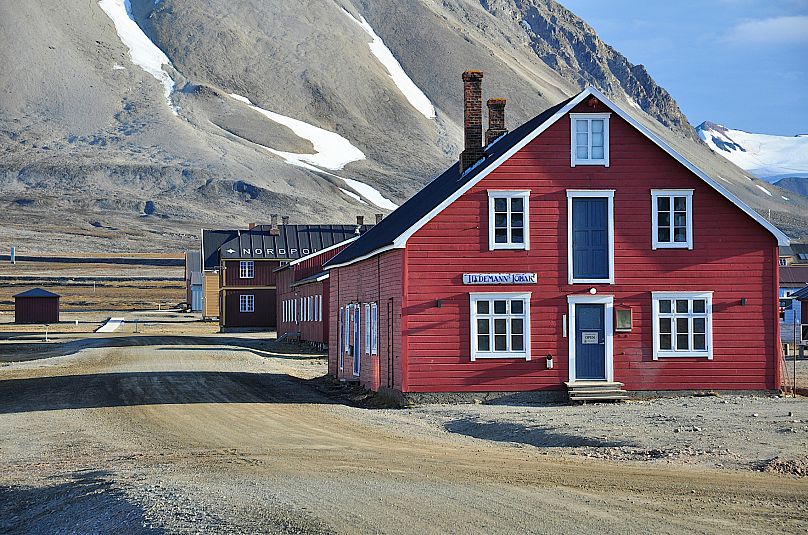
More than sixty percent of the archipelago enjoys protection within national parks and nature reserves. Here, polar bears, Arctic foxes, and reindeer move about unimpeded, but stringent environmental regulations determine visitor access areas and modes of transportation.
Accommodation is limited, mostly
traditional hotels
And small guesthouses scattered around Longyearbyen, with very few new projects currently planned.
Cruise tourism, which was previously growing in this area, is now undergoing reconsideration. With Norway implementing stricter environmental rules, the direction seems to be shifting towards smaller, lower-impact expedition cruises rather than big vessels.
Åland in Finland and Sweden’s Gotland are also considered some of Europe’s least crowded islands, providing slower-paced, more adventurous options away from typical tourist hotspots.
A Greek island that has steered clear of mass tourism
Even though it ranks as the fifth-largest island,
Greece
, Chios stays surprisingly off the beaten path.
It has approximately the same dimensions as Lanzarote, yet experiences about 21,000 less overnight stays per square kilometer.
This is largely intentional. Chios has historically maintained economic independence due to its unique mastic trees, found in just a handful of locations globally.
In the absence of pressure to build extensive tourist infrastructure, the island has adopted a more sustainable path, concentrating on small, family-operated guesthouses, renovated traditional homes, and safeguarding its cultural legacy.
Places such as Pyrgi and Mesta seem to be preserved from the passage of time, and although their shores are stunning, they stay pleasantly free of crowds. Here, nature is cherished in its raw form instead of being commercialized, leading to a type of tourism that complements the area without altering it.
Other lesser-known Greek islands that remain relatively uncrowded within Europe encompass Euboea, Lesbos, Lemnos, Ikaria, and Samos.
If you want to visit a Canary Island, opt for El Hierro
On the western edge of the Canaries, El Hierro feels worlds away from the region’s busiest resort hubs. With just 610 overnight stays per km2, it is Spain’s least crowded island destination.
Less than 11,000 residents inhabit the island, with tourism kept deliberately low-key.
Direct flights to this destination are not available.
El Hierro
This indicates that it attracts only a few tourists when compared to neighboring Tenerife. The island offers approximately 1,000 guest accommodations, primarily consisting of small lodges and countryside houses, with the biggest hotel having fewer than 50 rooms.
The scenery is rugged and breathtaking: volcanic cliffs, pristine swimming holes, old-growth forests, and mountainous farmlands all lie within a UNESCO-recognized Biosphere Reserve.
Tourists visit to go hiking, diving, and unplugging, as well as to immerse themselves in a more leisurely and grounded interpretation of island living.
Since
tourism
Initially developed on El Hierro Island, sustainability has been the priority.
Instead of focusing on increasing output, it has prioritized environmental conservation, self-reliance, and renewable resources, aiming to cut emissions by half by 2030 and attain net-zero emissions by 2050.
Tourism on El Hierro complements rather than displaces traditional sectors such as agriculture, which cultivates 98 percent of the pineapples produced across the Canary Islands.
Elsewhere in the Canaries, islands like La Palma and La Gomera appear to be avoiding the worst of mass tourism, but with visitor numbers rising across the archipelago, the window for maintaining that balance may be narrowing.