
That child alone must not be made a *sori* performer. That child must not sing *sori*.
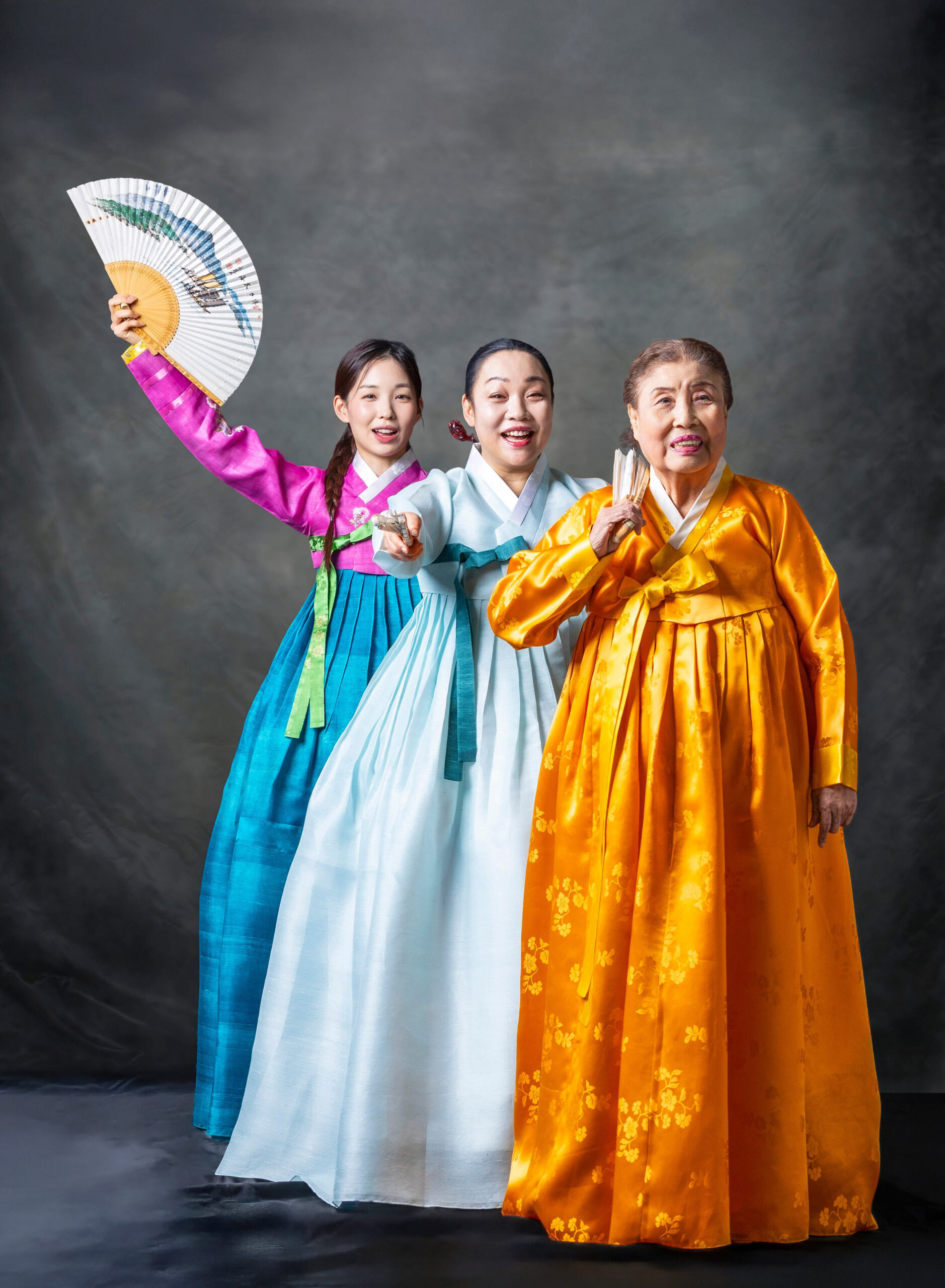
Hong Du-hwan, a renowned *janggu* drummer, sternly blocked his five-year-old daughter. Kim Ok-jin, a celebrated *sori* singer of that time, wept as she tried to stop her husband, who raised a switch and shouted, “Are you going to sing again?” “Husband, hit me instead. The parents are at fault. How can we stop her when she sees and hears it?” The girl had a natural talent for *sori* from birth. As a baby, she smiled at loud *nongak* (farmers’ music). Beatings, confinement, and pleading could not stop her. The girl, who secretly learned melodies by ear, eventually entered the path of *sori* and became a matriarch of Korean traditional music after decades. This is the story of Hong Seong-deok (81), former chairperson of the Korean Traditional Music Association and current chairperson of the Korean Women’s *Gukgeuk* Art Association.
Is there such a thing as a predetermined, unavoidable destiny? Looking at the Hong family, it seems like “fate” exists. Hong walked the path of *sori* despite opposition, and her daughter Kim Geum-mi (61, former head of the National Changgeuk Company’s music department) and granddaughter Park Ji-hyun (23, a student at Seoul National University’s traditional music department) followed the same path. The *sori* lineage, starting from her great-grandmother, has continued through the maternal line for four generations, enduring a century.
A year ago, the three generations of *sori* performers stood on the same stage. This was made possible by the National Heritage Promotion Agency’s project, “Korea’s First Women’s Opera: The Women Who Became Legends,” inspired by the drama *Jeongnyeon-i*, which sparked interest in women’s *gukgeuk*. Hong performed *Chunhyangjeon* with senior actors, while Kim and Park presented *Princess Seonhwa*. The audience’s reaction was explosive. Due to overwhelming demand, the performance was extended, and all three shows sold out.
Before the Lunar New Year, we met them. Hong’s voice, though over eighty, still carried strength. She warmly laughed while recounting old stories but teared up when remembering past hardships. When asked to sing, she immediately performed a part of *Chunhyangjeon*: “Love, love, my love~.” Even a brief hum changed the atmosphere. Her daughter and granddaughter carefully took care of the elderly master.
◇Dedicated to Women’s *Gukgeuk*
Women’s *gukgeuk* is far more captivating than dramas. The overwhelming emotion and chills it evokes cannot be described in words.
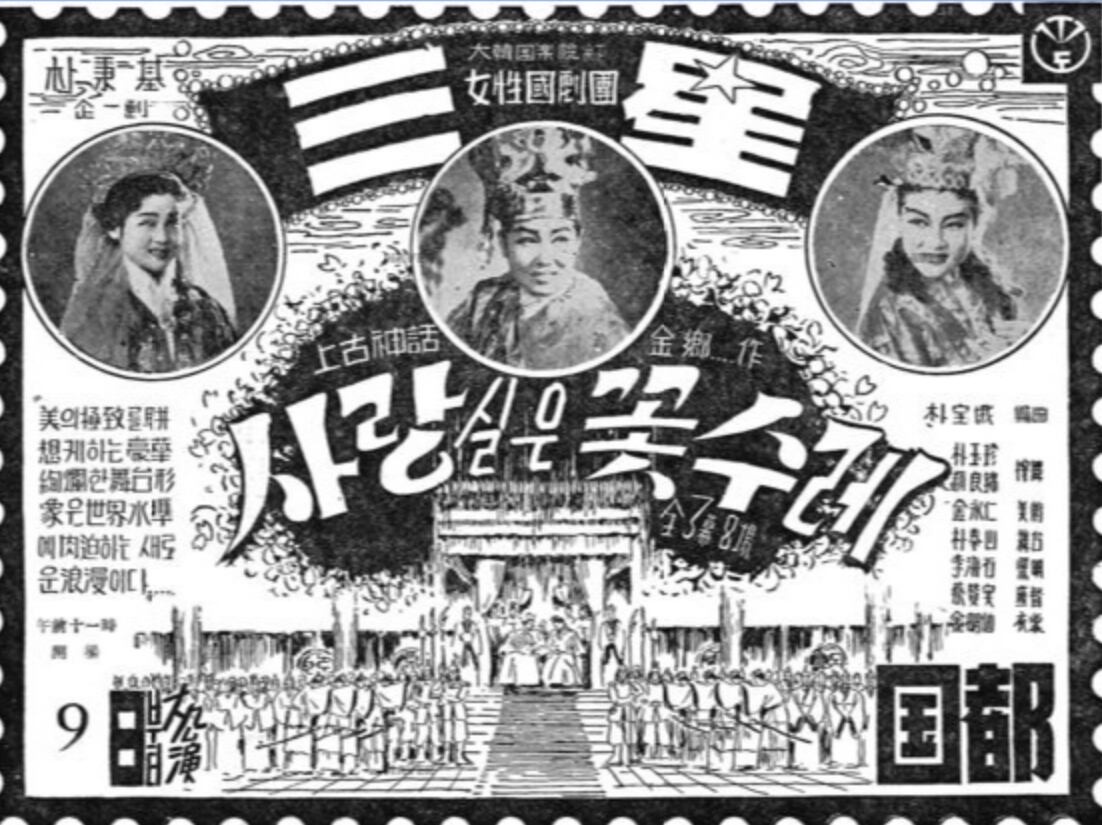
Women’s *gukgeuk* was a popular traditional theater in Korea during the 1950s-1960s. Unlike *changgeuk*, which focuses on singing, it is a comprehensive art combining song, acting, and dance, with all roles played by female actors. Hong, who fell in love with women’s *gukgeuk* after watching the Im Chun-ang Women’s *Gukgeuk* Troupe at sixteen, actively performed leading roles in works such as *Princess Seonhwa*, *Muyeongtap*, and *Chunhyangjeon* during the 1960s.
-Your popularity was immense.
It was beyond words. Back then, nothing surpassed *gukgeuk*. Many male lead fans refused to marry and followed the actors. Theaters were always full. The streets near performance venues were so crowded that traffic was impossible.
-Why did it decline?
With the rise of TV and film culture… Productions required huge costs, and personal funds had limits, making sustainability difficult.
-You founded the Seorabeol Korean Music Art Troupe in 1987.
I couldn’t bear to let such a captivating art form fade into history. I jumped in with the sole desire to revive it.
The troupe’s debut, *Saint Icha-don*, sold out at the National Theater’s main hall. However, subsequent regional performances were disastrous. In Daegu, four shows attracted fewer than fifty attendees. Unpaid actors called her a “fraud.” She sold her rings and necklace to return to Seoul and later sold her apartment to settle debts.
-But you never gave up.
If even one audience member comes, a *sori* performer must perform. The day after repaying debts, I was running nonstop. I persuaded the Olympic organizing committee to include *Saint Icha-don* in the 1988 Olympics celebrations, arguing that Korea’s unique beauty must be showcased and that the government should support dying traditions like watering a withering tree. Eventually, under the Olympic logo, we performed six times at the National Theater’s main hall, with encores.
-It must have remained challenging.
Always struggling, hustling, begging people… But it was worth it. Women’s *gukgeuk* holds a charm no other art does. I vowed to stage at least one production annually.
-What makes women’s *gukgeuk* so appealing?
“Those who have not seen it will not understand. Emotions are conveyed more directly. In scenes where actors embrace or express love, the feelings are more vivid than with male-female pairs. The deeper you watch, the more enchanting it becomes. China’s Yue opera is a UNESCO heritage, and Japan’s Takarazuka Revue is commercialized, yet our superior women’s *gukgeuk* remains unrecognized.” (Women’s *gukgeuk* failed to be designated as a national intangible heritage in 2018.)
◇The Fate of a Born *Sori* Performer
-You pursued *sori* despite your father’s opposition.
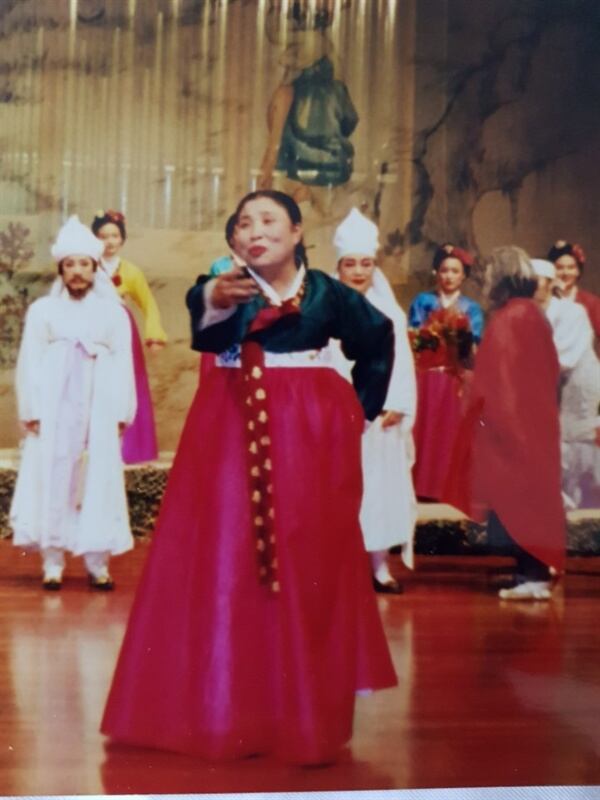
I was beaten often. He once rolled me in a straw mat and whipped me. As an only child, he didn’t want me to suffer. He knew the hardships… Even as a child, I loved *sori*. When my mother sang, I’d peek through holes in the paper door and imitate her.
-You made your debut at seven.
My parents’ troupe was performing ‘Heungbu and Nolbu.’ The child actor playing Dolnam-i, Heungbu’s youngest son, left. I asked, ‘Mom, can’t I play Dolnam-i?’ Im Bang-ul, a troupe member, said, ‘We need to perform, so let’s try Seong-deok once.’ My father had just left. After the performance, the actors hugged me and cried, ‘How did you learn this?’ ‘Where did such a talent come from?’
After her father’s death, her mother, who understood the “blood of *sori*,” took her ten-year-old daughter to master Park Bong-sul. When the daughter hesitated to leave her mother, Kim scolded, “How can you become a master if you’re afraid?” Eager to please her teacher, Hong devoted herself to *sori*, singing for hours under the moon on mountains.
-It must have been tough as a child.
I wouldn’t have continued if I thought it was hard. Being a *sori* performer was exhilarating. I only thought, ‘I must become a master.’
She studied under masters such as Park Bong-sul, Kang Do-geun, Hong Jeong-taek, Oh Jeong-suk, and Kim So-hee. In 1977, she moved to Seoul and focused on women’s *gukgeuk* before returning to *pansori*. In 1981, she won first place in the *pansori* category at the Namwon National Traditional Music Masters Competition. She later led the revival of women’s *gukgeuk* and served as chairperson of the Korean Traditional Music Association for eight years from 2012.
-You have performed overseas many times.
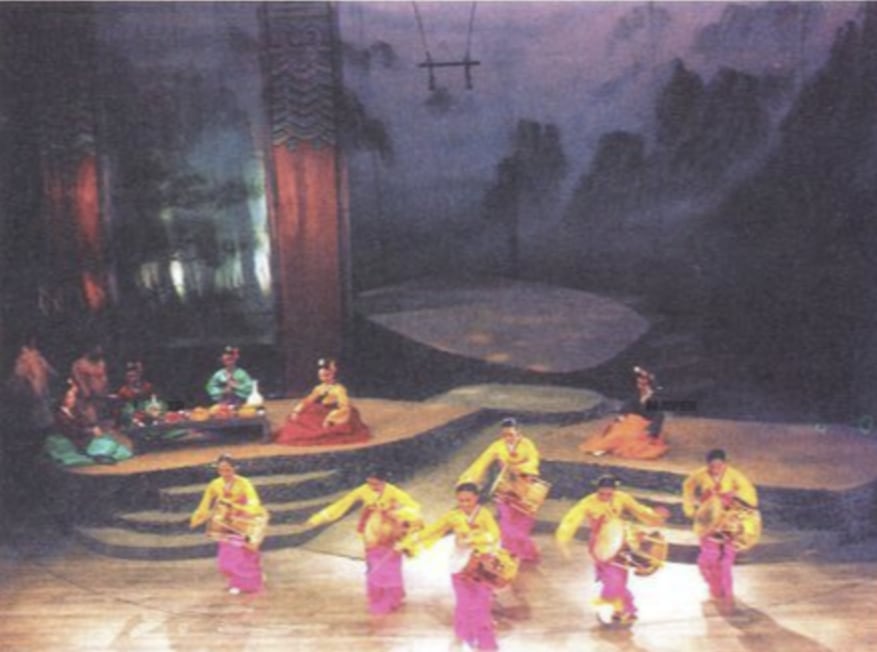
Over a hundred. The 1996 performance of *Hwang Jin-i* at Sydney Opera House remains unforgettable. I kept persuading them endlessly to make it happen. I cried. Overseas audiences react passionately: ‘We didn’t know Korea had this,’ ‘Where can we see more?’ It’s heartbreaking that it is more recognized abroad than at home.
She added, “While K-content is sweeping the world, its roots lie in our traditions. Not imitating others but preserving our originality is our strongest asset. Tradition is the starting point and future of all new things.”
They say that *sori* performers need much *han* (resentment). Hong’s life had many storms. In her thirties, she separated from her husband and lost her three children. Though reunited, she lost her youngest son in a traffic accident at sixty-six. She also survived cancer. When asked about her life, she paused and said, “It was tough, but I lived earnestly.” Asked if she regretted *sori*, she replied, “No. I did what others couldn’t. The hunger and pain became my *sori*.”
-You encouraged your daughter (Kim Geum-mi) to pursue *sori*.
You can tell. By age three, she was already singing. She must have heard it in the womb. I told her, ‘You were born to protect our tradition.’ She’s a far greater *sori* performer than me.
◇Resembling the Once-Hated Mother
Kim Geum-mi vowed never to follow her mother’s path. She felt sorry for her mother, who came home exhausted after performances. She hated the neighbors’ whispers about the “haunted house” and the poverty of *sori* performers. Yet, at twenty-five, she began *sori*. She joined the National Changgeuk Company in 1999 and won first place in the *pansori* category at the 2007 Jeonju Daesaseup Nori Competition.
-You ended up becoming a *sori* performer after all.
I always enjoyed singing. Around twenty, my mother asked, ‘Want to try Nongbu?’ When I imitated it, she said, ‘You’ve got it.’ I danced and performed in gukgeuk in my twenties, but my sori was weak. My mother said, ‘Sori is the path to longevity. You must sing.’ That’s when I started.
– Was it hard to start late?
Learning wasn’t difficult. Vocal training was tough. I practiced with all doors closed, screaming until my blood pressure rose, veins bulged, and I collapsed. I spent about ten years like that.
Until last year, she led the National Changgeuk Company’s music department. Known as a “reliable actor,” she received acclaim for her role as a queen in *The Women of Troy*. Two years ago, she successfully performed the full *Jeokbyeokga* (3 hours 30 minutes).
-What does a full performance mean to a *sori* performer?
“Proof I’m alive. I will perform *Jeokbyeokga* again in May.” (Kim has completed *Simcheongga*, *Sugungga*, and *Jeokbyeokga* among the five *pansori* genres.)
-You retired from the National Changgeuk Company last year.
Before, I performed assigned roles on set stages. Now, I must pursue my art. I need to fill the stage with my sensibilities and emotions, so I must work harder.
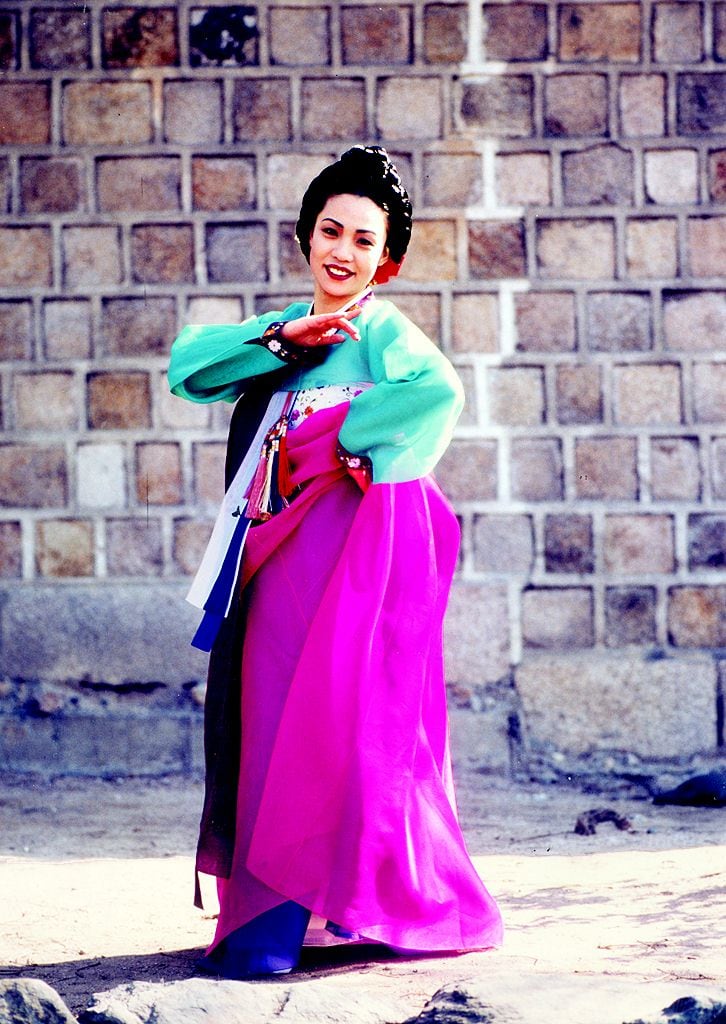
-Your most memorable performance?
Like Mother, Sydney Opera House. I played Hwang Jin-i. My voice was beautiful then. I can’t return to that time. I tell my daughter (Park), ‘Do you know how precious your voice is now?’ She probably doesn’t understand a mother’s heart. Haha.
-When did you understand your mother?
As a child, I hated her. When I needed protection, she was always singing. But becoming a *sori* performer and raising a child, I realized the weight she carried as a woman, mother, and artist…
-Your mother is a matriarch; you’re a rising star.
I’m a sandwich. I must support senior artists and help juniors persevere.
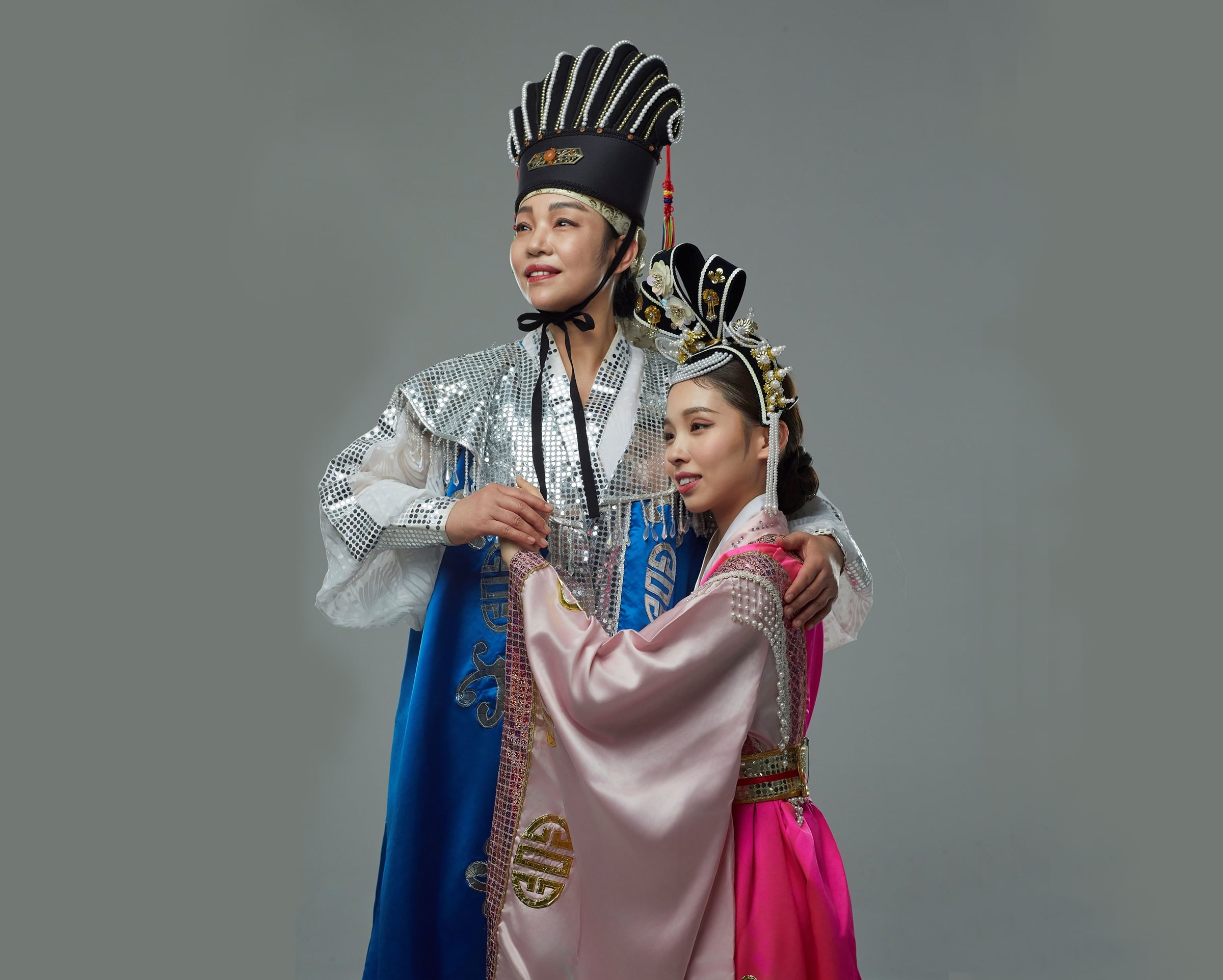
◇Continuing the *Sori* Lineage
Park Ji-hyun played the “girl” in *Seopyeonje; The Original*, a *sori* drama that premiered for the National Jeongdong Theater’s 30th anniversary last year. She made her debut at the age of six as a child actor in the women’s *gukgeuk* *Gyeonwoo and Jiknyeo*, and won first place in the student division of the 2021 Jeonju Daesaseup Nori *pansori* competition and the grand prize in the 2022 National Creative *Pansori* Competition.
-You started *sori* early.
I didn’t choose it; it came naturally. I knew *sori* was within me. At eleven, Mother took me to master Seong Chang-soon for a test. She said, ‘She must do it.’
-While friends sang idol songs, you sang *pansori*.
It was lonely. Around two to three years into *sori*, I even tried auditioning for a major entertainment company. I passed the first round, but Mother opposed it. I resented her then, but now I think she knew where my stage was.
-You played leading roles in *Princess Seonhwa* and *Seopyeonje*. Some might say “mother’s favoritism.”
I know that perspective. As a child, it was unfair – people focused on my background, not my skills. But now, I’m grateful to continue the four-generation legacy. Being able to ask Mother and Grandmother immediately is a blessing.
-Is continuing the lineage burdensome?
Lying would be wrong. My great-grandmother, grandmother, and mother are so accomplished… The responsibility makes me work harder.
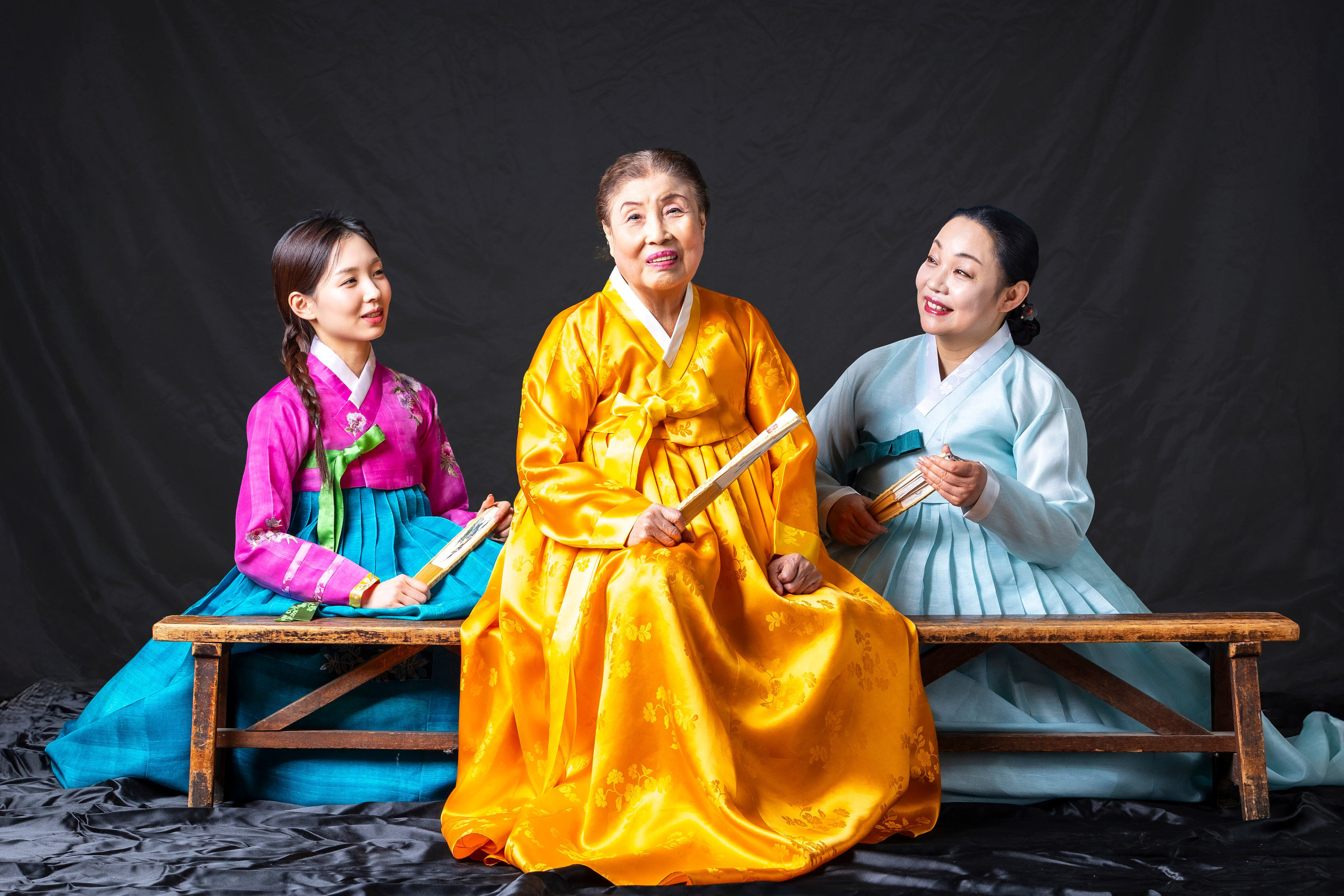
The three generations differed yet shared similarities. For example, when Park, who is currently on a break, said she practices “about two hours daily,” Hong said, “Too little. Practice more.” Kim remarked, “What matters is how you use the two hours.”
-Must *sori* be learned through hardship?
Hong: “Any success requires hardship. Comfortable success does not exist. Many young people give up traditional music – it’s that hard. I intentionally made my children suffer. Only through hardship does *sori* flow from the heart; that’s real *sori*.”
Kim: “I agree. Those who have suffered have different hearts and attitudes. As an artist, I want my daughter to endure hardship to gain resilience like a wildflower. But as a mother, I want to feed her and keep her warm. It’s tough.”
Asked if traditional music can rival global K-content, all agreed: “Traditional music is the world’s best” (Hong), “a wondrous music unmatched anywhere” (Kim), and “with effort, it will be recognized” (Park). Kim added, “Just as BTS performs at Gwanghwamun Plaza, traditional music deserves such stages.” When asked about dreams, their answers echoed: “I want to see *sori* through to the end and show the public its beauty” (Hong), “I’ll keep challenging to become a true *sori* performer” (Kim), and “I want to become a human cultural asset as a *sori* performer” (Park). The elderly master, her daughter, and granddaughter—all were born *sori* performers.
- Membership 5900 won, for newspaper readers 2900 won, Chosun Membership
- Enjoy 8 kinds of newspapers and magazines worth 55,000 KRW, Chosun Membership
- Receive 7000 points to use like cash, smart shopping, Chosun Membership