
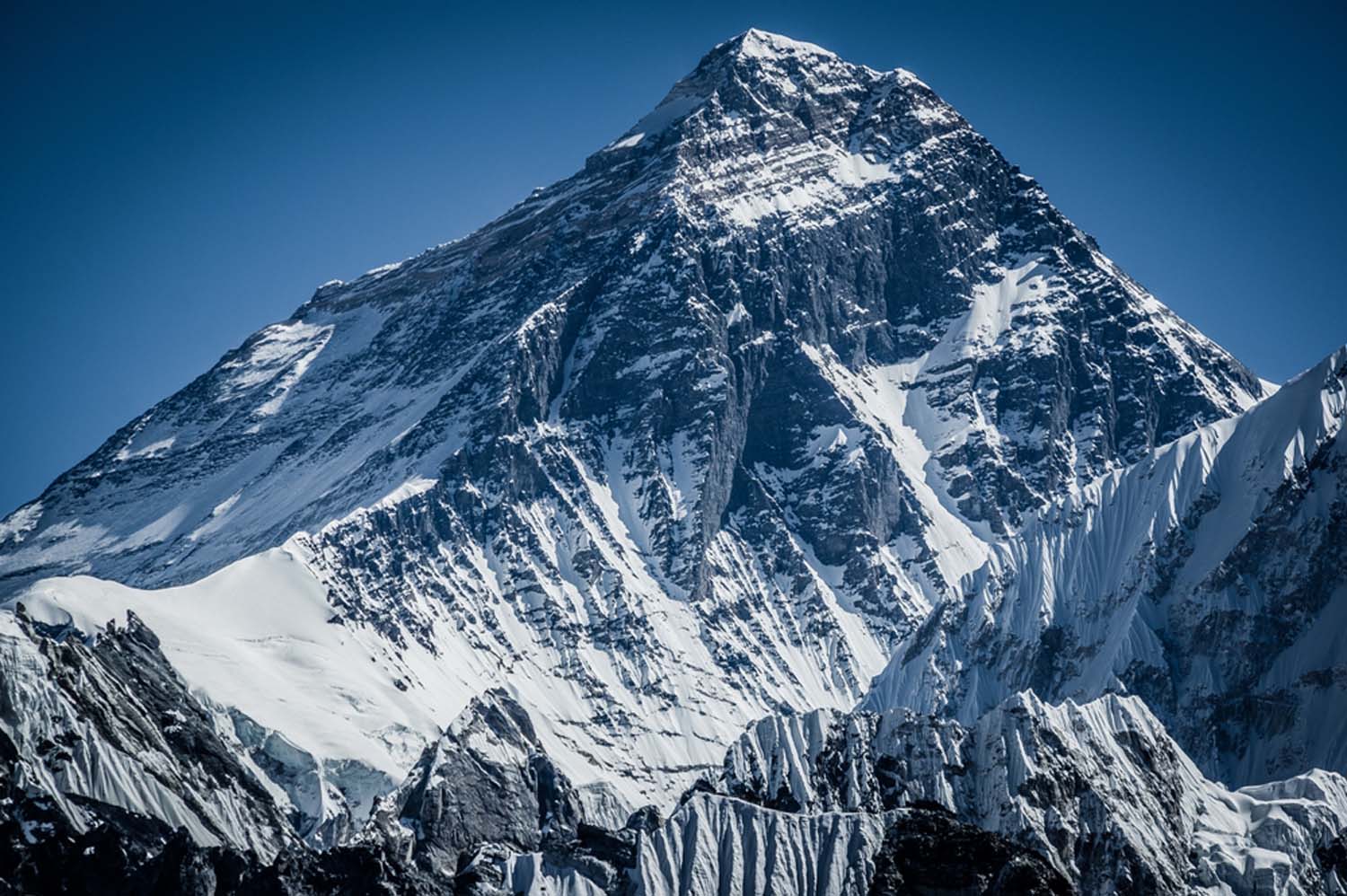
Nepal, May 29 – Few people inside or outside Nepal realize that the tallest mountain globally goes simply by the name Sagarmatha. This revelation came from none other than KP Sharma Oli, our contemporary seer and master storyteller who claims knowledge on every subject imaginable, and who currently serves as the Nepalese Prime Minister.
Although one must acknowledge the bravery involved in boldly expressing absurdity, I fail to grasp what enjoyment Oli derives from uttering such outrageous remarks. While we were unable to witness firsthand his comments regarding Sagarmatha/Chhomolongma/Everest, and these might have been misconstrued, considering his tendency toward preposterous declarations across various topics like public health, historical events, mythological narratives, and animal studies, it would be unreasonable to think that the press was attempting to embarrass him.
During this specific instance, Oli mentioned that Mount Everest is actually an alias and suggested calling it Sagarmatha instead. The grammar specialist emphasized that one shouldn’t alter a proper noun and stated firmly that ‘Sagarmatha remains Sagarmatha’. However, he seemed oblivious as he insisted ‘gaida is gaida’ regarding the Nepali term for a rhinoceros without extending his logic to common nouns. This led him to make a flawed claim about how the word ‘rhinoceros,’ which originates from old English, isn’t valid since England lacks these animals. Clearly assuming that only the English could create such terminology, he disregarded that the term traces back millennia to Ancient Greece, derived originally from the description “nose-horn.” I’m anticipating similar pronouncements dictating that the Royal Bengal Tiger must now go by names like “Pate Bagh” or some equally localized moniker.
Finding Everest
Returning to our starting point, Oli wasn’t entirely done yet. As an aficionado of mountains, he couldn’t resist sharing another fabricated tale. He mentioned that the individual for whom Everest was named was a Briton who believed Lhotse, rather than Sagarmatha, stood taller, implying that Everest had no connection to Sagarmatha. However, anyone familiar with even the basic history of ‘Peak B’, which came to be known as ‘Peak 15’ before being dubbed Mount Everest, knows this isn’t true. In reality, the mountain got its moniker from George Everest, once the Surveyor General of India, bestowed upon it by his successor, Andrew Waugh. By then, Sir George hadn’t been involved in such measurements for years, and Lhotse only figures into the story of Everest as its close neighbor.
The computation that established the mountain’s elevation is credited to Radhanath Sikdar, who was employed by the Survey of India. According to the well-known anecdote, Sikdar supposedly rushed into Waugh’s quarters in 1852 exclaiming, “Sir, I have found the tallest peak in the world.” However, as Craig Storti recounts in his captivating work, The Hunt for Mount Everest, the truth behind this event was considerably less sensational. While working with a group in Calcutta, Sikdar maintained communication with Waugh, who was stationed at the Survey of India headquarters in Dehradun, located quite some distance away. Furthermore, the revelation did not occur instantaneously; instead, it resulted from meticulous calculations carried out over two years by Sikdar along with his associates using data collected during the Great Trigonomertical Survey of India (1802–1871).
Waugh spent an additional four years confirming their discoveries by accounting for various elements like light refraction, barometric pressure, temperature, gravity, and fresh tidal data collected from Karachi. Finally, in 1856, he felt assured enough to state: “I now possess the definitive measurements of the summit labeled XV in the catalog maintained by the Office of the Surveyor General. For several years, we’ve been aware that this mountain surpasses all others previously surveyed in India and very likely stands as the tallest anywhere on Earth.”
Naming Everest
Climbing Peak XV saw several challengers fall short of claiming the throne as the tallest peak globally. For some time, summits like those of Nanda Devi, Dhaulagiri, and Kanchenjunga held fleeting moments at the pinnacle before relinquishing their claims. Once its elevation was established, deciding upon an appropriate name became challenging. In March 1856, Waugh presented findings to the Royal Geographical Society (RGS) in London, advocating for his preferred approach: “My esteemed former head and predecessor, Colonel George Everest, instructed me to attribute each geographic feature with its authentic indigenous designation. I consistently followed this practice, just as I did with all guidelines set forth by that distinguished geodesist.”
He proceeded to mention that the mountain lacked any known indigenous name and speculated that without Nepal’s permission to access the area, finding one would remain improbable. Then he asserted that naming ‘this majestic summit of our planet’ fell upon him as part of his serious responsibility. Thus, invoking this right, expressing heartfelt regard towards an esteemed leader, adhering to what he believed reflected the collective sentiment of all members under his leadership within the scientific division, and aiming to honor the legacy of a distinguished authority in precise geographic exploration, he decided to christen the prominent peak of the Himalayan range “Mount Everest.”
Waugh’s decision faced opposition right from the start, particularly from the British themselves. One prominent figure was Brian Houghton Hodgson, a previous British envoy to Nepal. A few months afterward, Hodgson voiced his disagreement during an event at the Royal Geographical Society: “While agreeing with Colonel Waugh about the appropriateness of using local names and fully supporting the sentiments behind naming the peak Mount Everest, I hope you will allow me to mention, respectfully, for the sake of my colleagues—the Nepalese people whom I’ve worked alongside—that this particular mountain has neither lost nor forgotten its original and recognized indigenous title, known as Devadhunga.”
It has subsequently become clear that even though Hodgson possessed extensive knowledge about Nepal, he was incorrect when asserting the existence of a mountain named Devadhunga within the country. However, according to Walt Unsworth’s comprehensive work titled *Everest*, Waugh would undoubtedly have heard this peak referred to by its name on the Tibetan side. Unsworth points out that an old French map from 1733, derived from rough sketches created by French Capuchin monks residing in Lhasa during the early decades of the century, correctly identified the location of what we now call Mount Everest and labeled it ‘Tschoumou-Lancma’. He comments: “Given how readily accessible the term Chomolungma (regardless of its transliteration into Western alphabets) seemed to be for traveling monks, it appears highly improbable that over a hundred years later, the Indian Survey remained unaware of this designation.”
The same title would also probably be familiar to the Sherpas in the Everest area due to their enduring cultural and trade connections across the Nangpa-La pass. However, our leading historian Baburam Acharya overlooked this detail when suggesting the name ‘Sagarmatha’.
I’ll continue discussing the naming conventions andKP Malla’s critical assessment of Acharya in my upcoming article. However, I’d like to conclude this piece withUnsworth’s observation. He ponders how things might differ ifGeorge Everest’s surname had beenCuthbert Shufflebottom: “EvenWaugh might have hesitated overMt Shufflebottom, sinceEverest undoubtedly carries an impressive resonance befittingthe world’s tallest peak.”
I completely concur.